CMX Post-Summit Webinar Series - Career, Growth and the Renaissance Mind with Suzanne Shaw and Avital Knoller
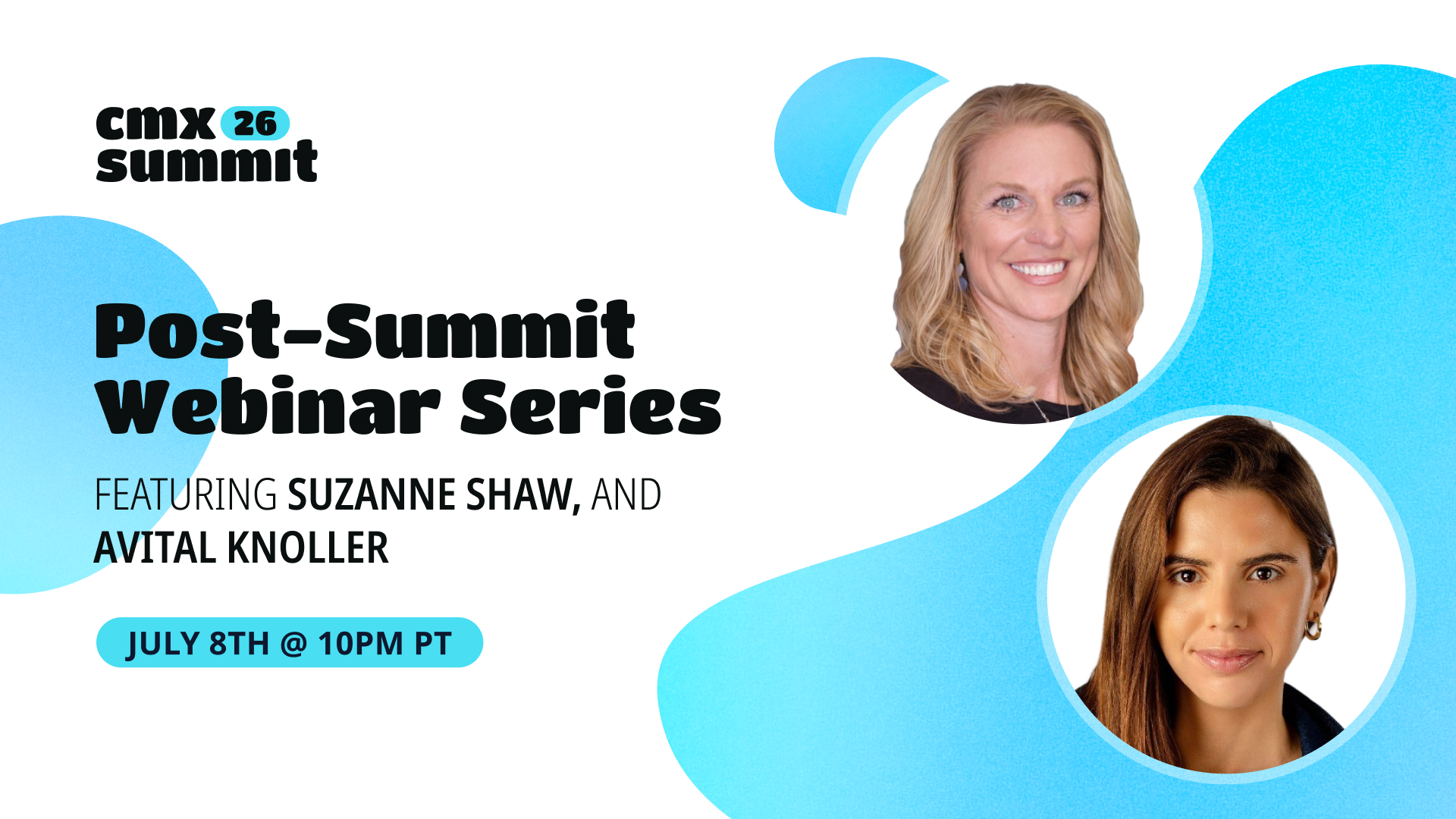
Actionable Takeaways from Suzanne Shaw and Avital Knoller
📡 Community Is a Signal Engine, Not a Support Function
Suzanne's core message: engagement metrics are not the outcome — they're just the fuel. Registrations, attendance numbers, posts, and badges are a signal that something might happen next. The shift Suzanne made was tracking what actually happened next: which accounts were showing up, what deals were being influenced, how retention compared between community-engaged customers versus everyone else. When she started speaking in those terms — pipeline influenced, ARR represented, retention delta — leadership didn't just listen. They started investing.
Action: Pick one engagement metric you're currently reporting on and trace it forward. What business outcome could it be connected to? Build even a simple manual dashboard that maps community participation to opportunities, retention, or expansion in the quarter that follows.
Measure: Stop reporting activity in isolation. Report influence. Deals touched, pipeline generated, retention lift, and support deflection are the metrics that move executives — not member counts.
🎨 Community Managers Are Renaissance Minds — Be One
Avital's core message: community managers aren't generalists who couldn't specialize. They're connectors who specialize in something nobody else in the company does — seeing how everything fits together. Marketing hears one story. Product hears another. Sales has different objections. Customer success has different frustrations. Community sits in the middle of all of it. That's not a liability. That's a superpower. The best community managers aren't the busiest ones. They're the ones who help their companies learn faster.
Action: If you haven't already, schedule interviews with stakeholders across every function — marketing, sales, product, CS, support. Ask two questions: what does community mean to you, and what problems are you trying to solve right now? Then start building programs that address their answers.
Measure: Are other teams coming to you for insight rather than you having to pitch your way into their conversations? Over time, being sought out as a strategic thought partner is one of the clearest signals that community has stopped being a nice-to-have.
🏆 Find the Fast Win, Then Build the Long Game
Both Suzanne and Avital landed here from different angles: community programs that drive real business impact take time to build, but you can't afford to wait a year to show value. The move is to identify the one or two things that can demonstrate impact quickly — a customer advisory board, a product-focused event series, a metric leadership is already tracking — and deliver on those fast, while the longer term programs develop alongside them. And when you do show up with results, make sure you're speaking the language of whoever you're in the room with.
Action: Look at what your exec team, board, or business unit leaders are focused on right now — churn, pipeline, a new product launch — and ask yourself how community can show up there this quarter. Don't wait for the perfect program. Find the fastest relevant one and go.
Measure: Are you showing up in the recaps that matter — QBRs, exec updates, cross-functional planning meetings? Getting your metrics into those rooms, even in a small way, is how community starts becoming infrastructure instead of a line item.
Suzanne and Avital were telling the same story from completely different backgrounds — one from sales, one from philosophy — and they landed in exactly the same place. Community becomes strategic not by proving its value louder, but by making itself genuinely indispensable to the work everyone else is already doing.
You can rewatch the session and revisit the highlights below!
Access the Complete Webinar Replay
Actionable Takeaways from Suzanne Shaw and Avital Knoller
📡 Community Is a Signal Engine, Not a Support Function
Suzanne's core message: engagement metrics are not the outcome — they're just the fuel. Registrations, attendance numbers, posts, and badges are a signal that something might happen next. The shift Suzanne made was tracking what actually happened next: which accounts were showing up, what deals were being influenced, how retention compared between community-engaged customers versus everyone else. When she started speaking in those terms — pipeline influenced, ARR represented, retention delta — leadership didn't just listen. They started investing.
Action: Pick one engagement metric you're currently reporting on and trace it forward. What business outcome could it be connected to? Build even a simple manual dashboard that maps community participation to opportunities, retention, or expansion in the quarter that follows.
Measure: Stop reporting activity in isolation. Report influence. Deals touched, pipeline generated, retention lift, and support deflection are the metrics that move executives — not member counts.
🎨 Community Managers Are Renaissance Minds — Be One
Avital's core message: community managers aren't generalists who couldn't specialize. They're connectors who specialize in something nobody else in the company does — seeing how everything fits together. Marketing hears one story. Product hears another. Sales has different objections. Customer success has different frustrations. Community sits in the middle of all of it. That's not a liability. That's a superpower. The best community managers aren't the busiest ones. They're the ones who help their companies learn faster.
Action: If you haven't already, schedule interviews with stakeholders across every function — marketing, sales, product, CS, support. Ask two questions: what does community mean to you, and what problems are you trying to solve right now? Then start building programs that address their answers.
Measure: Are other teams coming to you for insight rather than you having to pitch your way into their conversations? Over time, being sought out as a strategic thought partner is one of the clearest signals that community has stopped being a nice-to-have.
🏆 Find the Fast Win, Then Build the Long Game
Both Suzanne and Avital landed here from different angles: community programs that drive real business impact take time to build, but you can't afford to wait a year to show value. The move is to identify the one or two things that can demonstrate impact quickly — a customer advisory board, a product-focused event series, a metric leadership is already tracking — and deliver on those fast, while the longer term programs develop alongside them. And when you do show up with results, make sure you're speaking the language of whoever you're in the room with.
Action: Look at what your exec team, board, or business unit leaders are focused on right now — churn, pipeline, a new product launch — and ask yourself how community can show up there this quarter. Don't wait for the perfect program. Find the fastest relevant one and go.
Measure: Are you showing up in the recaps that matter — QBRs, exec updates, cross-functional planning meetings? Getting your metrics into those rooms, even in a small way, is how community starts becoming infrastructure instead of a line item.
Suzanne and Avital were telling the same story from completely different backgrounds — one from sales, one from philosophy — and they landed in exactly the same place. Community becomes strategic not by proving its value louder, but by making itself genuinely indispensable to the work everyone else is already doing.
You can rewatch the session and revisit the highlights below!
Upcoming events
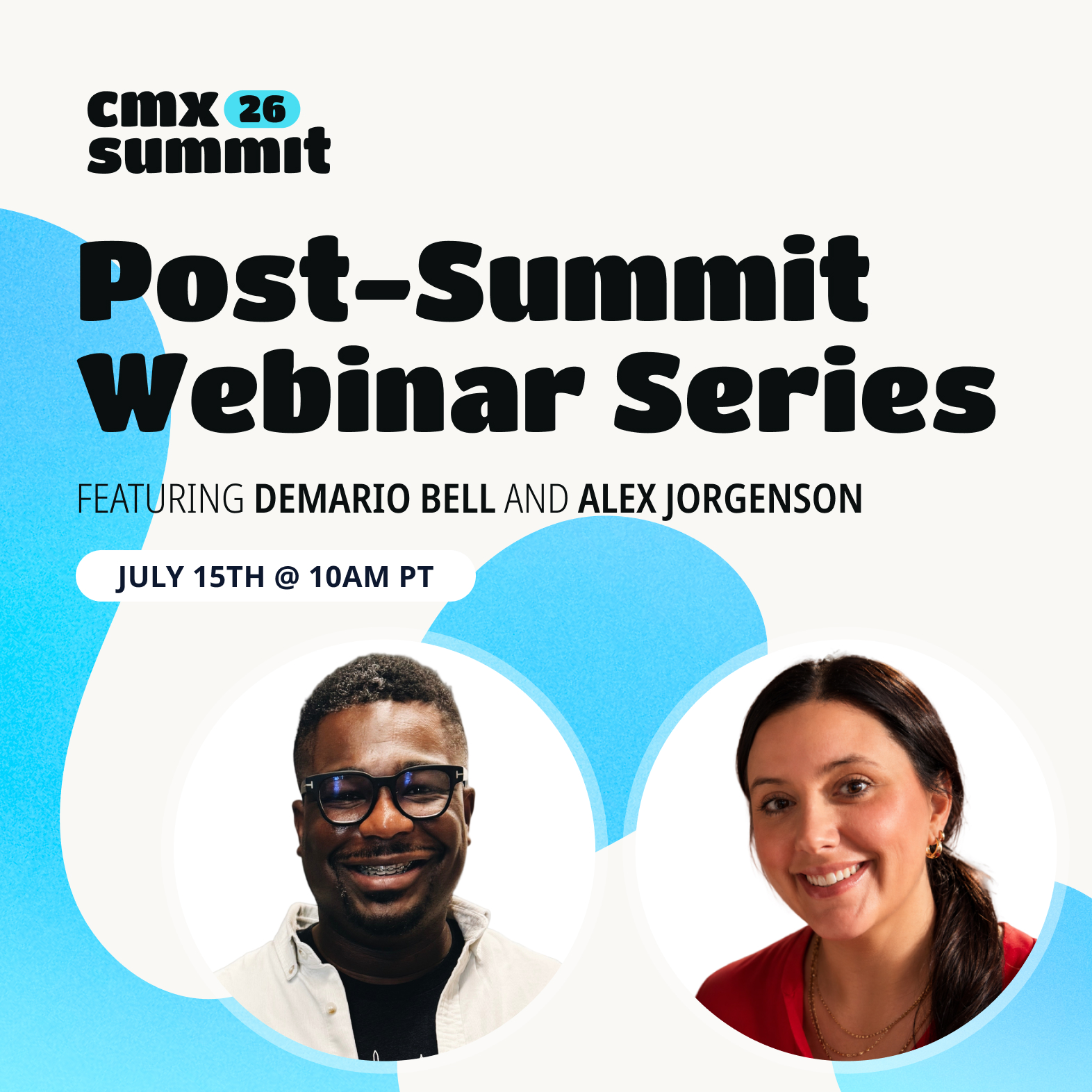
Community as Infrastructure & Office Hours That Drive Adoption with DeMario Bell & Alex Jorgenson


Two CMX speakers return to go deeper: reframe community as GTM infrastructure and launch an Office Hours program that drives real adoption—fast.
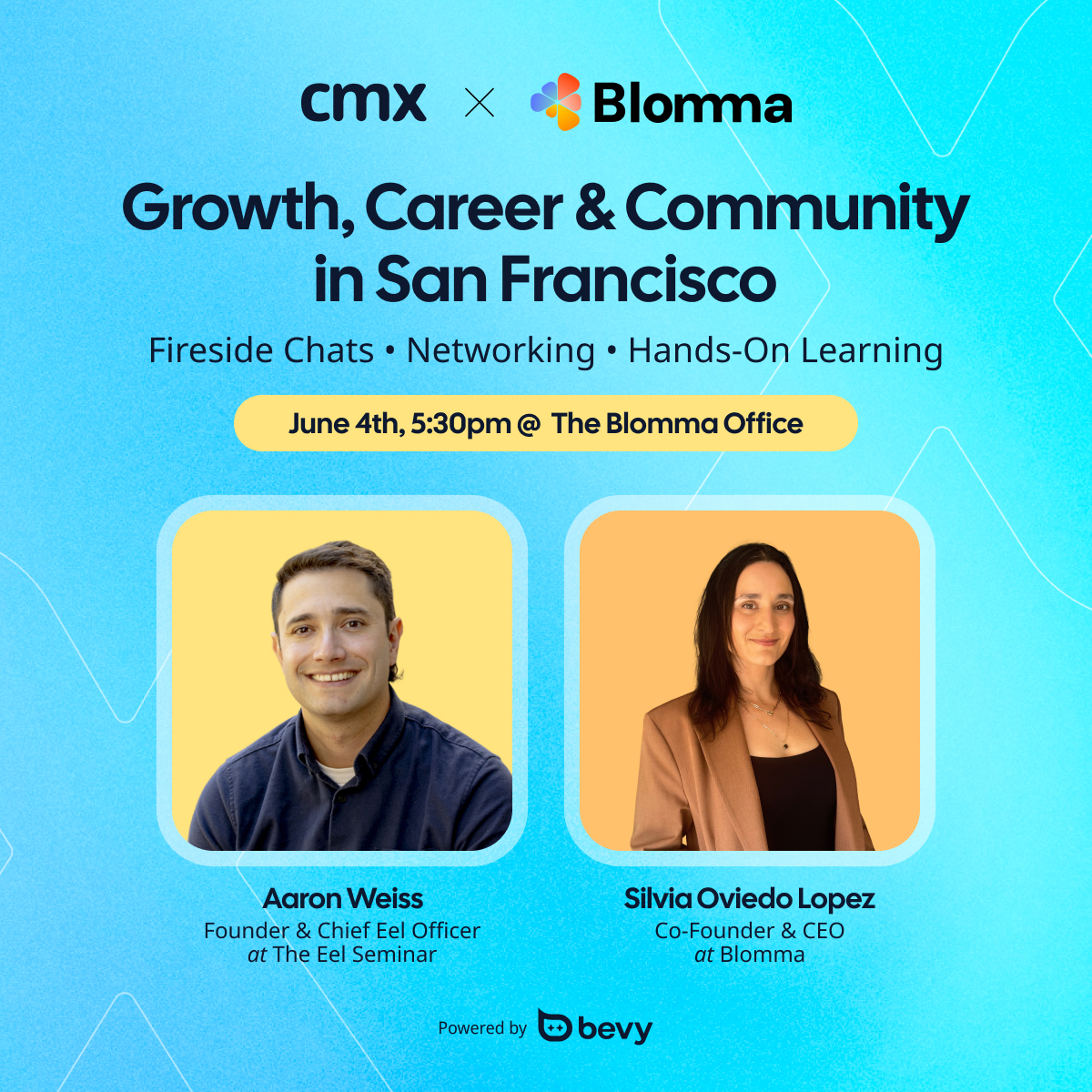
CMX x Blomma: Growth, Career & Community in SF
Join us for an intimate evening in SF bringing together a small group of community pros for networking, an honest fireside conversation, and real hands-on time with tools to help you advance your career and your practice.
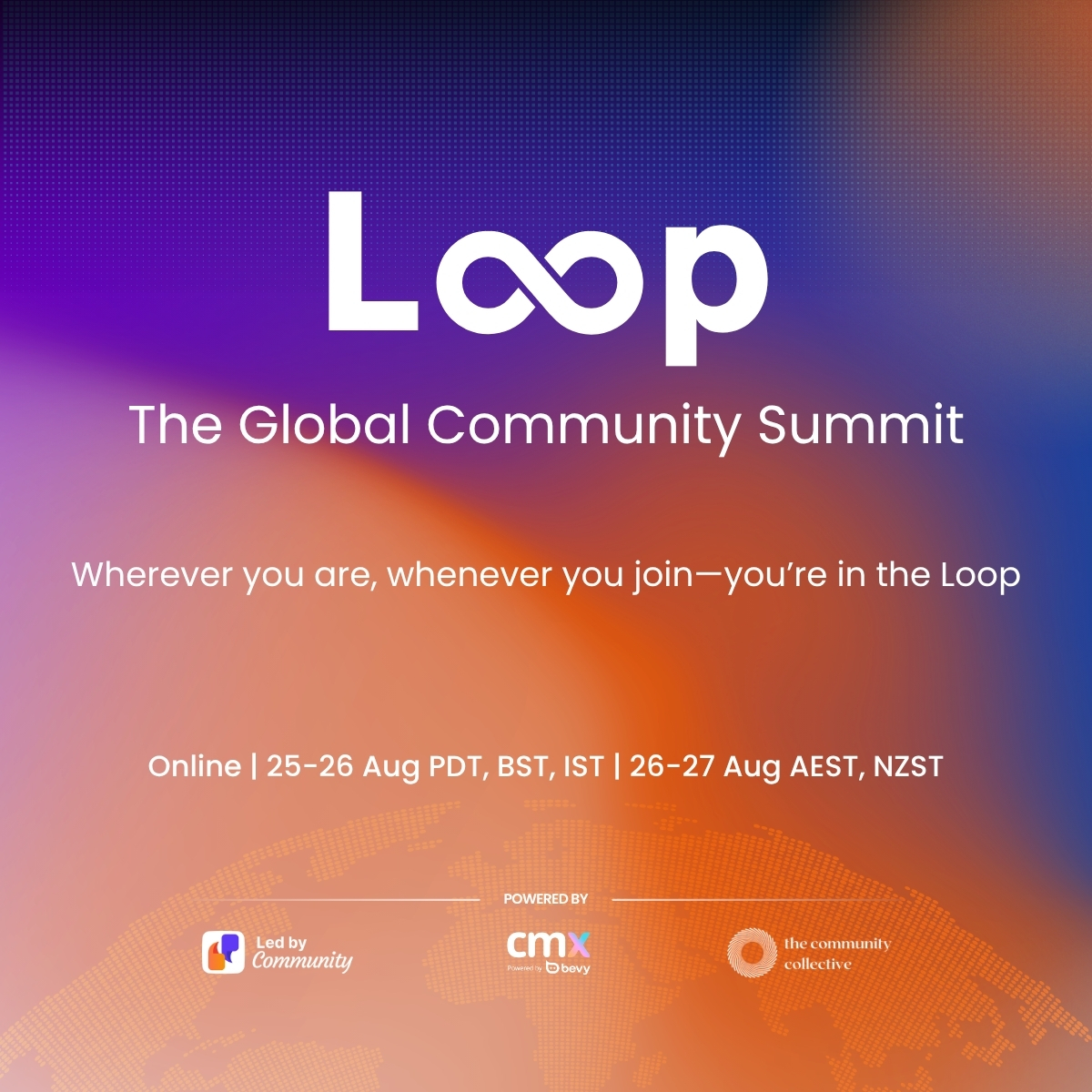
Loop 2026: The Global Community Summit
For the first time ever, the global community industry is coming together in one continuous, 24-hour virtual experience. Loop is a full-day orbit around the world, starting where we finish and circling through every region, time zone, and voice that makes this industry thrive. Hosted by CMX, Led by Community, and The Community Collective, this summit is more than an event—it’s a global relay of ideas, connection, and inspiration.
CMX Summit 2027
The community industry's flagship event is coming back. CMX Summit brings together the world's leading community professionals for two days of honest conversation, tactical depth, and the kind of connections that actually stick.