CMX Post-Summit Webinar Series - Hot Takes: Friction and Trust with Santiago Espinosa and Vero Heino
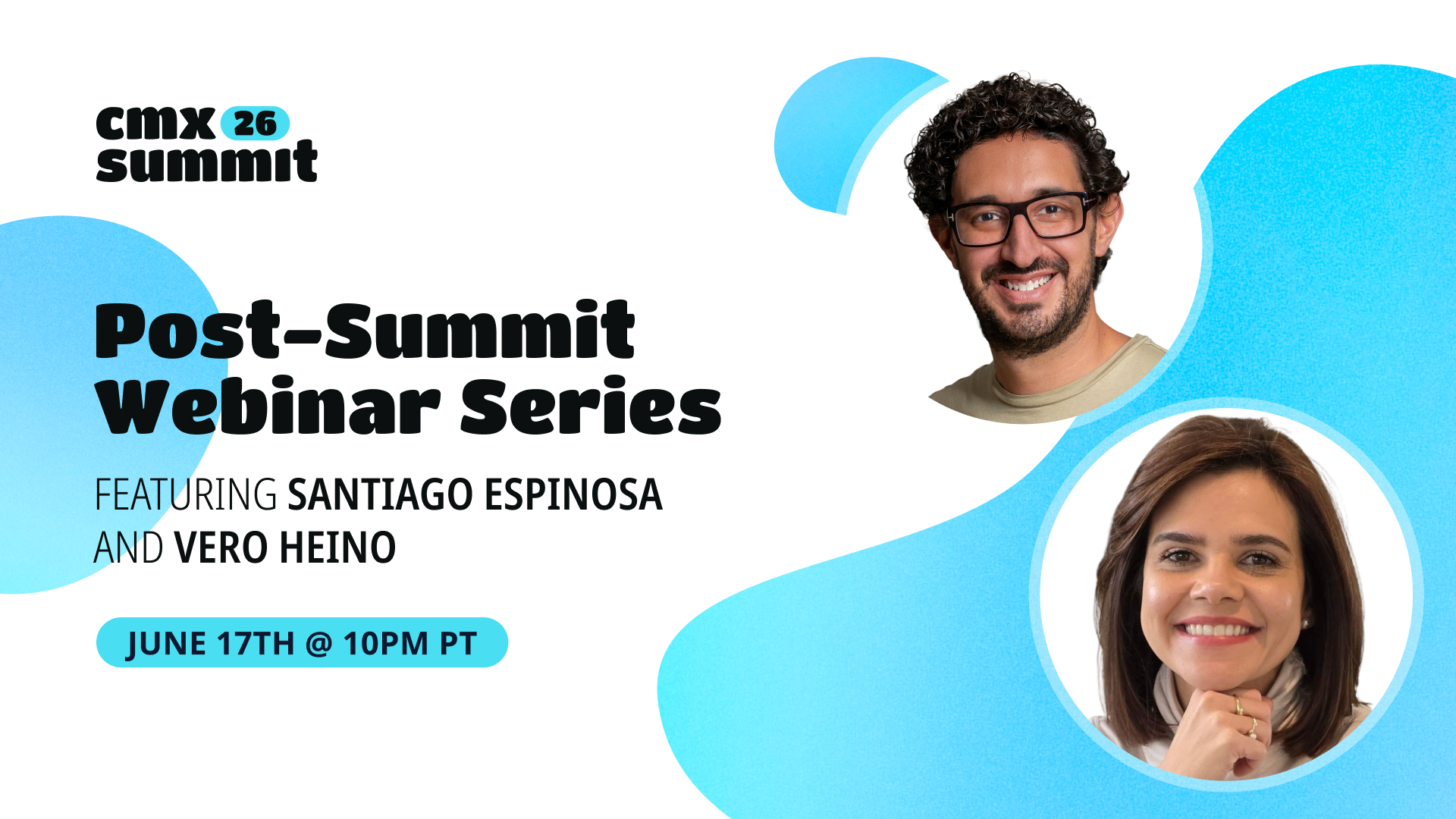
Actionable Takeaways from Santiago Espinosa and Vero Heino
🪨 Friction Isn't the Enemy, It's the Design
Santiago's core message: we've spent years optimizing for frictionless experiences, removing every extra click, every extra step, every barrier to entry.
But behavioral science tells us something different, that shared hardship is what creates lasting bonds. The communities that feel most alive aren't the ones that made it easiest to join. They're the ones that asked something of their members first. When Keat added a single question to their onboarding, "how has this brand impacted your life?", enrollment dropped by half and engagement went up 1,000%.
Action: Audit your community for places where you've made things too easy. Onboarding, contribution, resource access: pick one and design a small friction layer that acts as a commitment filter. Run it as a pilot on a subset of your community before rolling it out broadly.
Measure: Don't just track enrollment numbers, track what happens after. Are members coming back? Are the conversations deeper? Are people sharing stories they wouldn't have shared before? Remember: quality of engagement over quantity of members.
🤝 Your Community Is a Trust Engine, Not an Engagement Channel
Vero's core message: in 2025, companies spent $32 billion on external influencers to build credibility with audiences, while community budgets were being cut. The irony is that the most trusted voices for your brand are already inside your community. They're the ones whose comments spark real conversation, whose answers people actually act on. When community is measured only by activity, that signal gets buried in the noise. The moat isn't engagement. It's trust.
Action: Do a mapping exercise. Go through your community and identify the small cohort of members, usually far fewer than you'd expect, whose presence genuinely moves the conversation. Ask yourself: if they disappeared tomorrow, would the narrative shift? Those are your trust builders. Start intentionally nurturing that relationship.
Measure: Move beyond volume metrics. Track depth of conversation, sentiment shifts, and what happens when your trust builders are active versus when they're not. Give them real access through product previews, feedback loops, & two-way dialogue, and measure the halo effect that creates across channels.
🔬 Value Over Volume And Test Everything
Both Santiago and Vero landed here: the instinct to optimize for bigger numbers is exactly what's holding community programs back. More members, more posts, more engagement; but none of it matters if the people aren't the right people having the right conversations. The shift is from measuring how much is happening to measuring whether it's actually working. And the way to get there isn't a big sweeping overhaul; it's through tiny experiments, clear hypotheses, and honest feedback loops.
Action: Pick one thing you want to change, a friction layer, a trust-builder program, a new way of recognizing contributors, and run the smallest possible version of it. Set a hypothesis before you start so you know what success actually looks like.
Measure: Is the value members are getting from the community increasing? Are the right conversations happening more often? Use member stories and qualitative signals alongside your quantitative data; sometimes the most important thing isn't what the dashboard shows, it's what people are saying.
Taken together, Santiago and Vero were making the same point from different angles: easy isn't always better, and busy isn't the same as valuable. The communities that will win aren't the ones with the most members or the most posts. They're the ones where people feel like they belong and actually trust what they find there.
You can rewatch the session and revisit the highlights below!
Access the Complete Webinar Replay
Actionable Takeaways from Santiago Espinosa and Vero Heino
🪨 Friction Isn't the Enemy, It's the Design
Santiago's core message: we've spent years optimizing for frictionless experiences, removing every extra click, every extra step, every barrier to entry.
But behavioral science tells us something different, that shared hardship is what creates lasting bonds. The communities that feel most alive aren't the ones that made it easiest to join. They're the ones that asked something of their members first. When Keat added a single question to their onboarding, "how has this brand impacted your life?", enrollment dropped by half and engagement went up 1,000%.
Action: Audit your community for places where you've made things too easy. Onboarding, contribution, resource access: pick one and design a small friction layer that acts as a commitment filter. Run it as a pilot on a subset of your community before rolling it out broadly.
Measure: Don't just track enrollment numbers, track what happens after. Are members coming back? Are the conversations deeper? Are people sharing stories they wouldn't have shared before? Remember: quality of engagement over quantity of members.
🤝 Your Community Is a Trust Engine, Not an Engagement Channel
Vero's core message: in 2025, companies spent $32 billion on external influencers to build credibility with audiences, while community budgets were being cut. The irony is that the most trusted voices for your brand are already inside your community. They're the ones whose comments spark real conversation, whose answers people actually act on. When community is measured only by activity, that signal gets buried in the noise. The moat isn't engagement. It's trust.
Action: Do a mapping exercise. Go through your community and identify the small cohort of members, usually far fewer than you'd expect, whose presence genuinely moves the conversation. Ask yourself: if they disappeared tomorrow, would the narrative shift? Those are your trust builders. Start intentionally nurturing that relationship.
Measure: Move beyond volume metrics. Track depth of conversation, sentiment shifts, and what happens when your trust builders are active versus when they're not. Give them real access through product previews, feedback loops, & two-way dialogue, and measure the halo effect that creates across channels.
🔬 Value Over Volume And Test Everything
Both Santiago and Vero landed here: the instinct to optimize for bigger numbers is exactly what's holding community programs back. More members, more posts, more engagement; but none of it matters if the people aren't the right people having the right conversations. The shift is from measuring how much is happening to measuring whether it's actually working. And the way to get there isn't a big sweeping overhaul; it's through tiny experiments, clear hypotheses, and honest feedback loops.
Action: Pick one thing you want to change, a friction layer, a trust-builder program, a new way of recognizing contributors, and run the smallest possible version of it. Set a hypothesis before you start so you know what success actually looks like.
Measure: Is the value members are getting from the community increasing? Are the right conversations happening more often? Use member stories and qualitative signals alongside your quantitative data; sometimes the most important thing isn't what the dashboard shows, it's what people are saying.
Taken together, Santiago and Vero were making the same point from different angles: easy isn't always better, and busy isn't the same as valuable. The communities that will win aren't the ones with the most members or the most posts. They're the ones where people feel like they belong and actually trust what they find there.
You can rewatch the session and revisit the highlights below!
Upcoming events
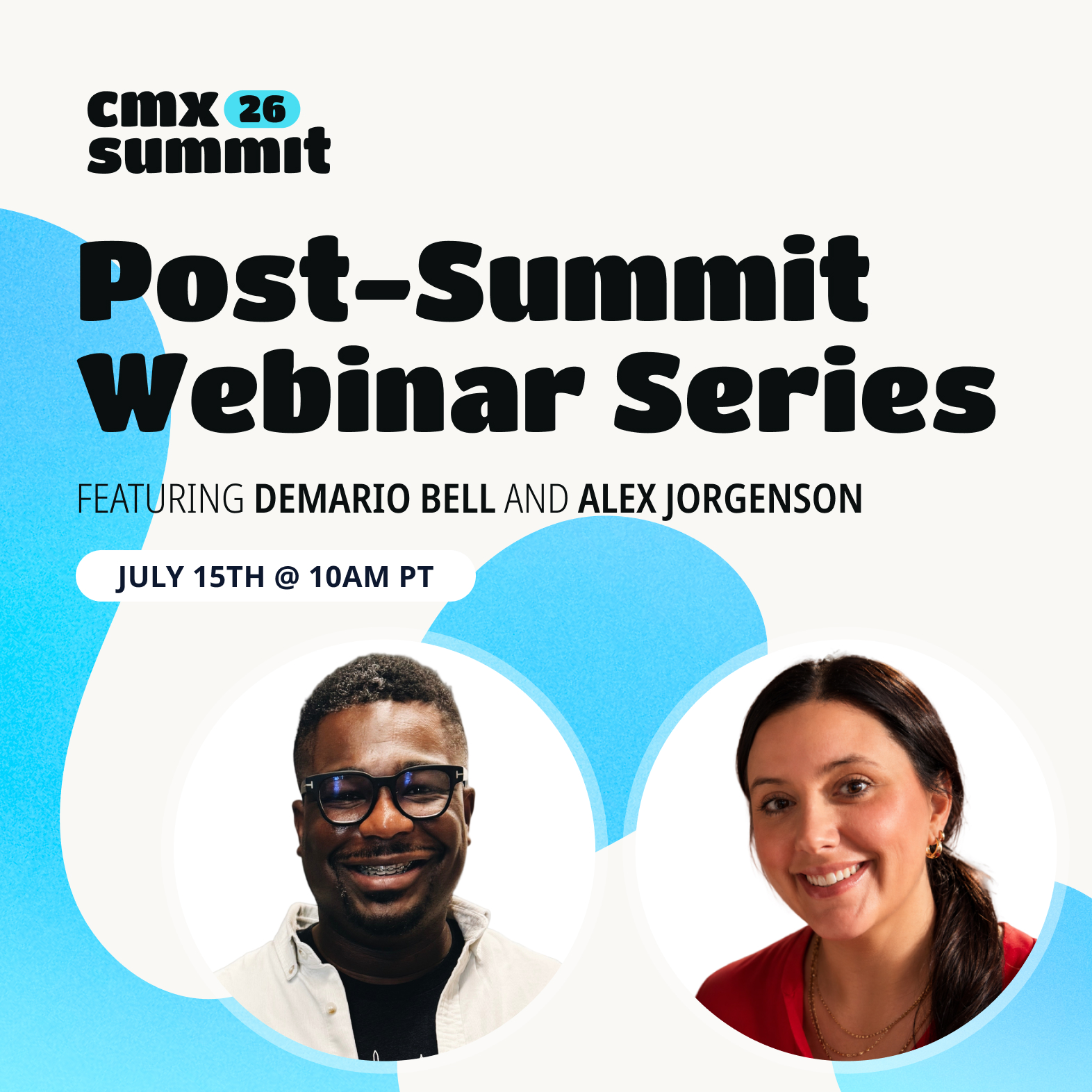
Community as Infrastructure & Office Hours That Drive Adoption with DeMario Bell & Alex Jorgenson


Two CMX speakers return to go deeper: reframe community as GTM infrastructure and launch an Office Hours program that drives real adoption—fast.
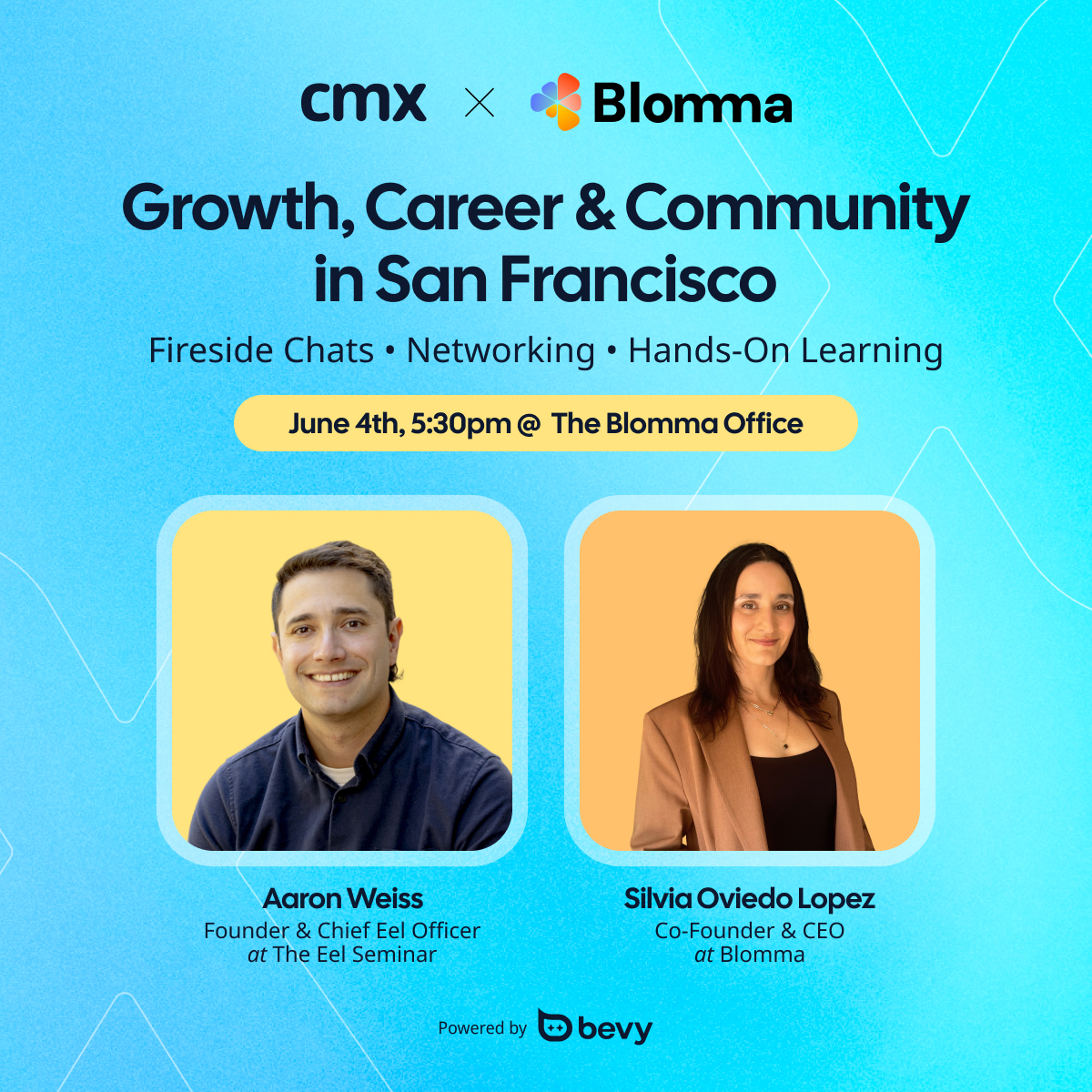
CMX x Blomma: Growth, Career & Community in SF
Join us for an intimate evening in SF bringing together a small group of community pros for networking, an honest fireside conversation, and real hands-on time with tools to help you advance your career and your practice.
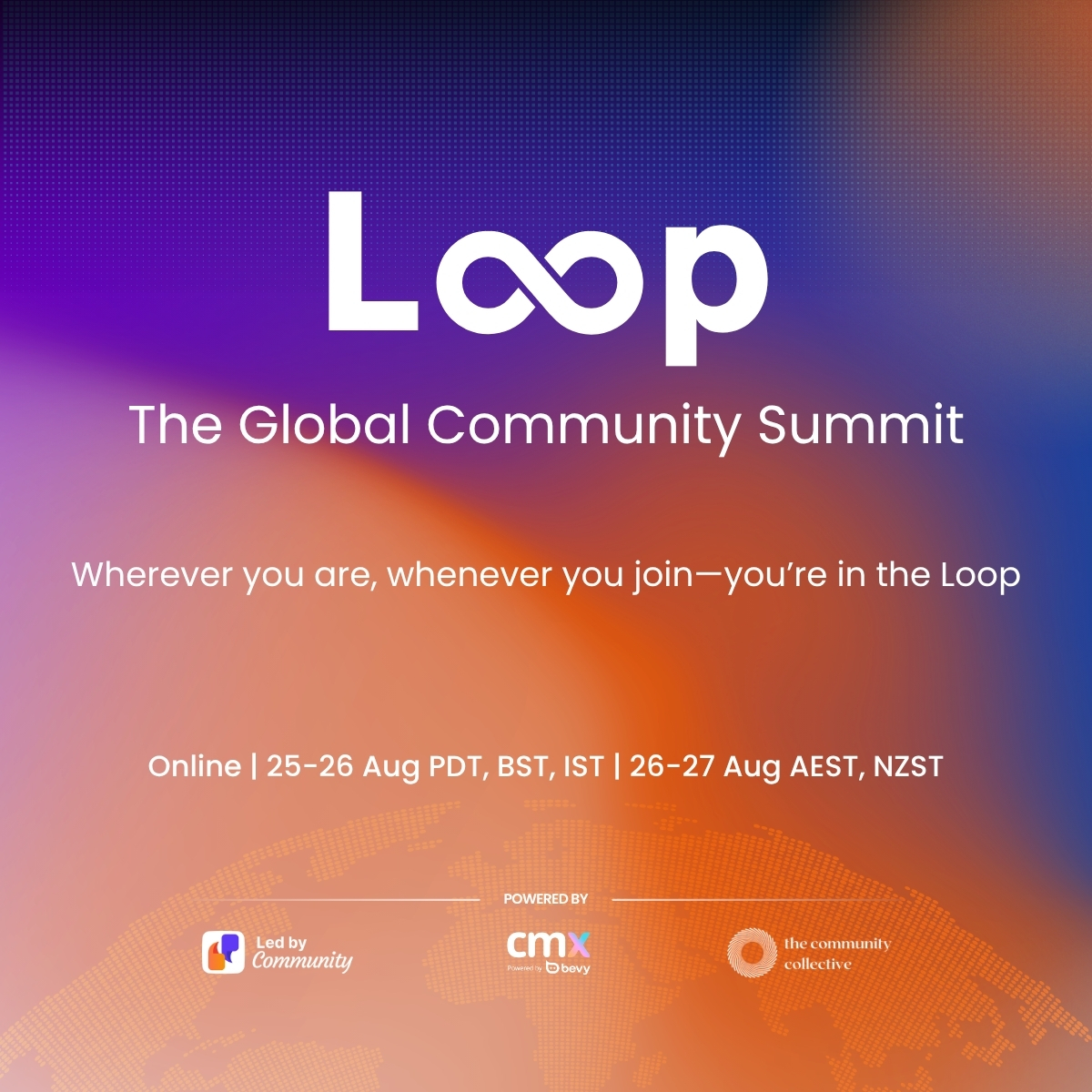
Loop 2026: The Global Community Summit
For the first time ever, the global community industry is coming together in one continuous, 24-hour virtual experience. Loop is a full-day orbit around the world, starting where we finish and circling through every region, time zone, and voice that makes this industry thrive. Hosted by CMX, Led by Community, and The Community Collective, this summit is more than an event—it’s a global relay of ideas, connection, and inspiration.
CMX Summit 2027
The community industry's flagship event is coming back. CMX Summit brings together the world's leading community professionals for two days of honest conversation, tactical depth, and the kind of connections that actually stick.