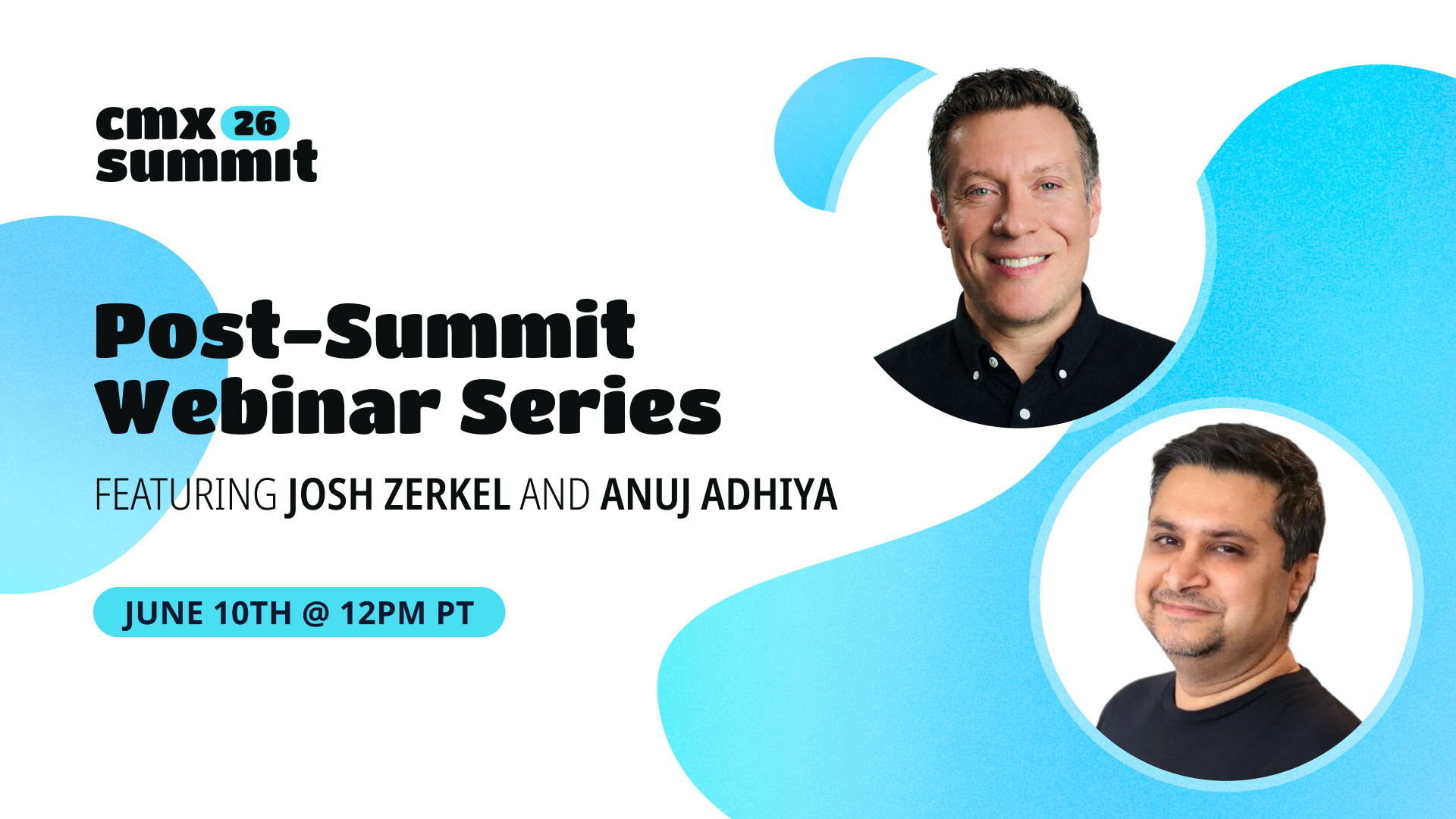
CMX Post-Summit Webinar Series - Metrics, Measurement & Community-Led Growth with Anuj Adhiya & Josh Zerkel
Actionable Takeaways from Josh Zerkel and Anuj Adhiya
📊 Your Dashboard Is Lying to You — And AI Is Why
Anuj's core message: the metrics we built our community programs around were designed for a world where people help people. When AI enters the picture, those metrics don't just become less useful — they actively mislead. High session time, engagement spikes, record interaction volume. These can all be signs of friction and frustration, not value. The only way to know what's really happening is to stop worshipping the green arrows and go read the actual conversations.
Action: Pick one AI feature in your community and pull the last 20 interactions. Read them. Mark each as success, failure, or unclear — then calculate your intent resolution rate (did they get what they came for?), turns to success (how much friction did it take?), and recovery rate (when AI failed, did they escalate or disappear?).
Measure: Use those three numbers, not engagement metrics, to report upward. Tie them to retention risk, support costs, and silent churn. That's the language leadership actually cares about.
🗺️ Community Led Growth Got Us on the Map — But It's Not Enough
Josh's core message: community led growth gave the industry important new language and raised expectations for what community could drive. But it didn't change anything about how organizations actually run. Community is still sitting on the island — off to the side of the core systems that are staffed, budgeted, and resourced to produce outcomes. And when something isn't part of how the system actually works, it gets questioned, deprioritized, and cut — even when the value is clearly there.
Action: Stop trying to prove community's overall value and start identifying one workflow owned by another team — onboarding, customer education, feedback loops — where the outcome would measurably improve if community was integrated directly into it. Start there.
Measure: Improvement in the KPI that team already owns — activation rate, support ticket volume, feature adoption — not a separate community metric. When community is integrated, its impact shows up in someone else's numbers too.
💪 Stop Being So Nice — Own Your Impact
Both Anuj and Josh landed here independently: community builders are some of the most empathetic, people-first professionals in the industry, and that's genuinely a superpower. But too many community teams let themselves get sidelined, rely on a single internal champion, and keep translating their value instead of demanding a seat at the table. In a world where AI is widening the gap between businesses and the humans they serve, the ability to build real human connection has never been more valuable. Act like it.
Action: Identify where community is actually moving the needle in your business and practice communicating it in the language your stakeholders use — revenue, retention, cost, churn. Then look at your internal relationships: are they person-dependent or system-dependent? Build toward the latter.
Measure: Are you being included in planning conversations, roadmap reviews, or QBRs — not just community-specific ones? Proximity to strategic decisions is a leading indicator that community has stopped being a nice-to-have.
Taken together, Anuj and Josh were telling the same story from different angles: community isn't failing because it lacks value. It's failing because the systems around it — measurement, integration, internal positioning — haven't caught up. Fix those, and everything else follows
You can rewatch the session and revisit the highlights below!
Access the Complete Webinar Replay
Actionable Takeaways from Josh Zerkel and Anuj Adhiya
📊 Your Dashboard Is Lying to You — And AI Is Why
Anuj's core message: the metrics we built our community programs around were designed for a world where people help people. When AI enters the picture, those metrics don't just become less useful — they actively mislead. High session time, engagement spikes, record interaction volume. These can all be signs of friction and frustration, not value. The only way to know what's really happening is to stop worshipping the green arrows and go read the actual conversations.
Action: Pick one AI feature in your community and pull the last 20 interactions. Read them. Mark each as success, failure, or unclear — then calculate your intent resolution rate (did they get what they came for?), turns to success (how much friction did it take?), and recovery rate (when AI failed, did they escalate or disappear?).
Measure: Use those three numbers, not engagement metrics, to report upward. Tie them to retention risk, support costs, and silent churn. That's the language leadership actually cares about.
🗺️ Community Led Growth Got Us on the Map — But It's Not Enough
Josh's core message: community led growth gave the industry important new language and raised expectations for what community could drive. But it didn't change anything about how organizations actually run. Community is still sitting on the island — off to the side of the core systems that are staffed, budgeted, and resourced to produce outcomes. And when something isn't part of how the system actually works, it gets questioned, deprioritized, and cut — even when the value is clearly there.
Action: Stop trying to prove community's overall value and start identifying one workflow owned by another team — onboarding, customer education, feedback loops — where the outcome would measurably improve if community was integrated directly into it. Start there.
Measure: Improvement in the KPI that team already owns — activation rate, support ticket volume, feature adoption — not a separate community metric. When community is integrated, its impact shows up in someone else's numbers too.
💪 Stop Being So Nice — Own Your Impact
Both Anuj and Josh landed here independently: community builders are some of the most empathetic, people-first professionals in the industry, and that's genuinely a superpower. But too many community teams let themselves get sidelined, rely on a single internal champion, and keep translating their value instead of demanding a seat at the table. In a world where AI is widening the gap between businesses and the humans they serve, the ability to build real human connection has never been more valuable. Act like it.
Action: Identify where community is actually moving the needle in your business and practice communicating it in the language your stakeholders use — revenue, retention, cost, churn. Then look at your internal relationships: are they person-dependent or system-dependent? Build toward the latter.
Measure: Are you being included in planning conversations, roadmap reviews, or QBRs — not just community-specific ones? Proximity to strategic decisions is a leading indicator that community has stopped being a nice-to-have.
Taken together, Anuj and Josh were telling the same story from different angles: community isn't failing because it lacks value. It's failing because the systems around it — measurement, integration, internal positioning — haven't caught up. Fix those, and everything else follows
You can rewatch the session and revisit the highlights below!
Upcoming events
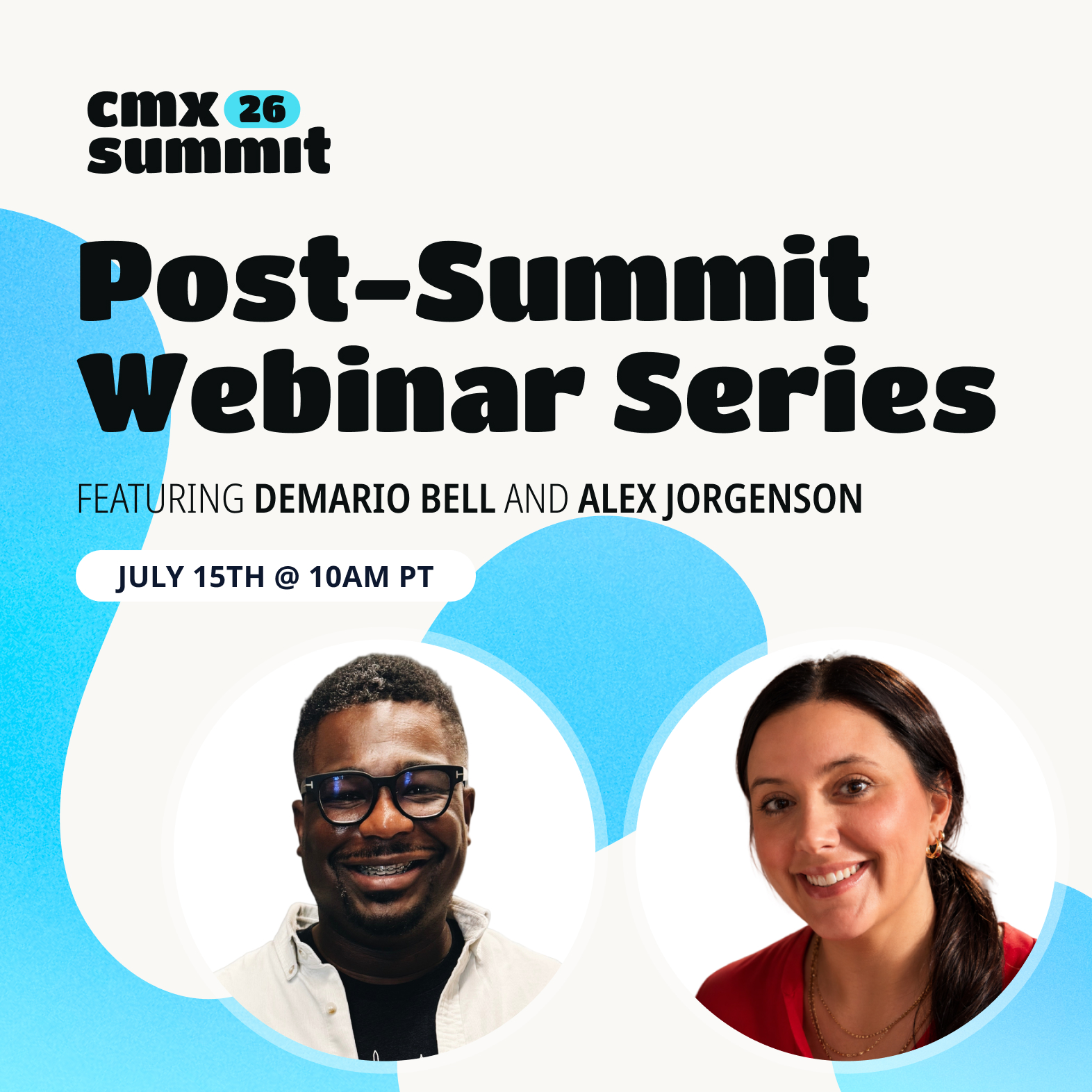
Community as Infrastructure & Office Hours That Drive Adoption with DeMario Bell & Alex Jorgenson


Two CMX speakers return to go deeper: reframe community as GTM infrastructure and launch an Office Hours program that drives real adoption—fast.
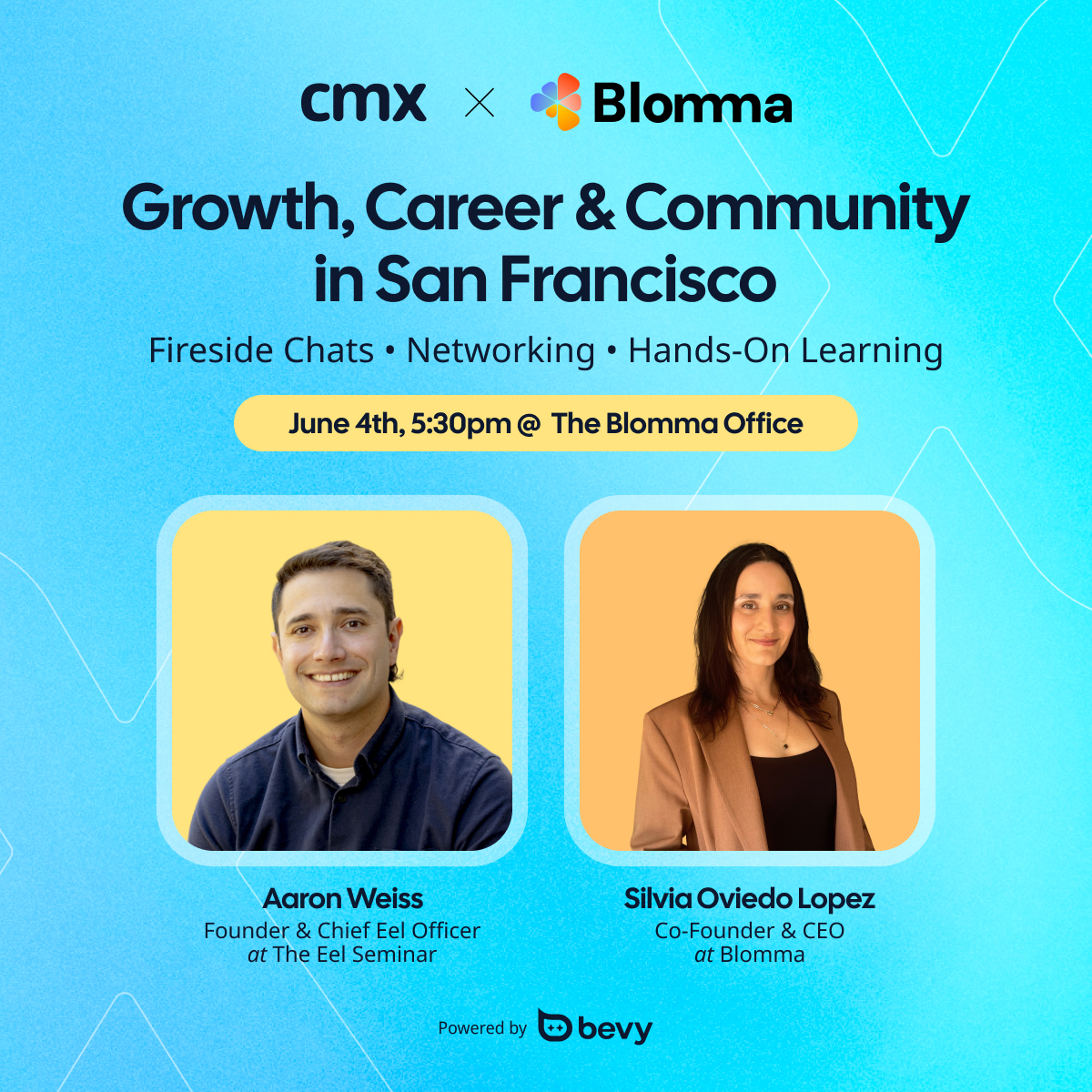
CMX x Blomma: Growth, Career & Community in SF
Join us for an intimate evening in SF bringing together a small group of community pros for networking, an honest fireside conversation, and real hands-on time with tools to help you advance your career and your practice.
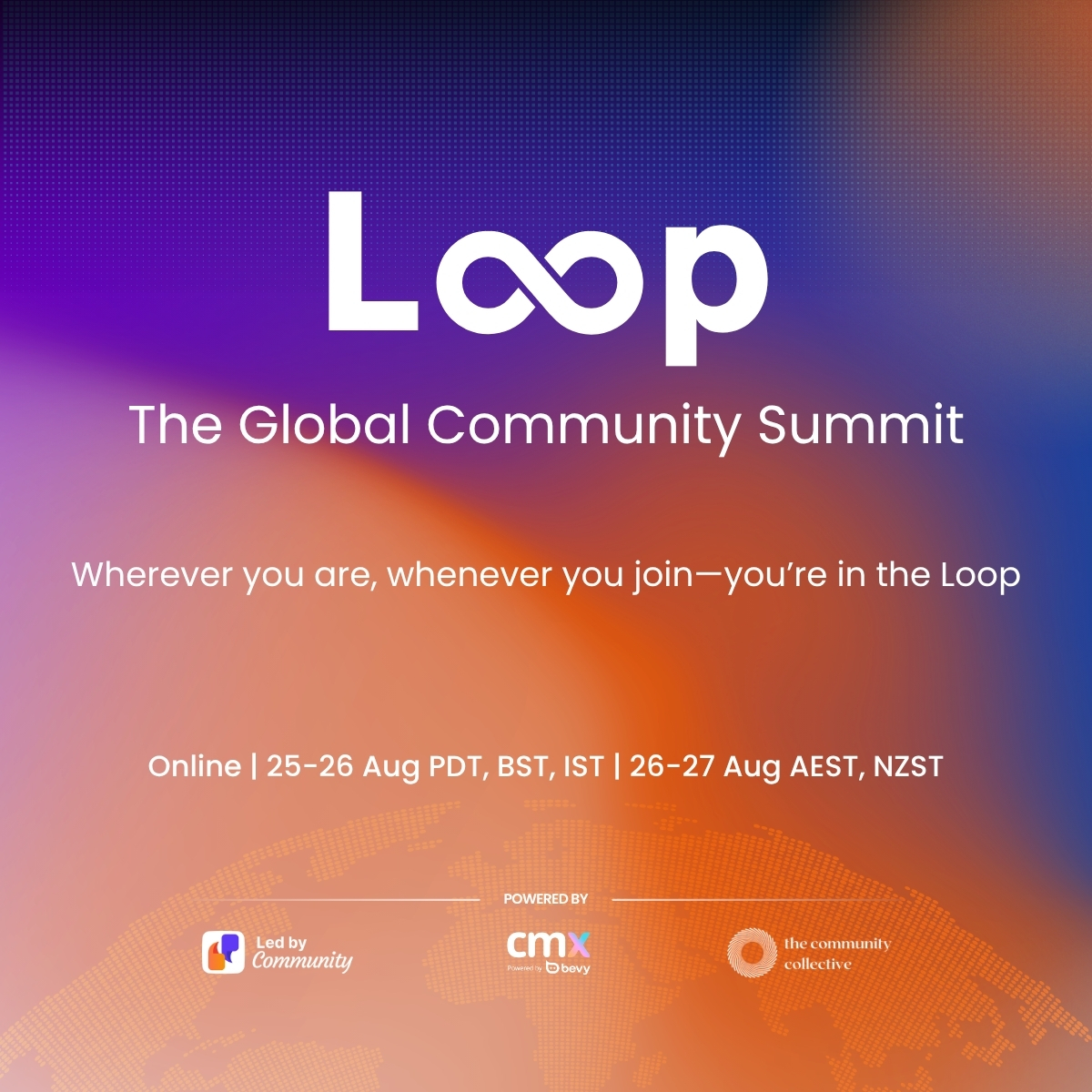
Loop 2026: The Global Community Summit
For the first time ever, the global community industry is coming together in one continuous, 24-hour virtual experience. Loop is a full-day orbit around the world, starting where we finish and circling through every region, time zone, and voice that makes this industry thrive. Hosted by CMX, Led by Community, and The Community Collective, this summit is more than an event—it’s a global relay of ideas, connection, and inspiration.
CMX Summit 2027
The community industry's flagship event is coming back. CMX Summit brings together the world's leading community professionals for two days of honest conversation, tactical depth, and the kind of connections that actually stick.